I preordered Rand Fishkin and Amanda Natividad’s upcoming book Zero Click Marketing because this is one of the most important marketing conversations happening right now. Not because clicks stopped mattering. They still matter. But because too many marketers are still using a 2018 playbook on a 2026 internet that keeps answering the question before the click ever happens.
If you’re a small business owner, a marketing lead, or an SEO who still measures everything through sessions, form fills, and last-click attribution, this shift can feel frustrating. Honestly… it should. The platforms changed the rules. Google keeps more activity inside Search. Social platforms keep rewarding native content over outbound links. AI tools answer more questions without sending users to your site first.
That does not mean marketing stopped working. It means the click is no longer the whole story.
What Zero-Click Marketing Actually Is
Zero-click marketing is the discipline of building awareness, trust, recall, and demand even when the audience never visits your site on the first interaction.
Amanda Natividad started popularizing the idea in 2022 as a response to what platforms were already rewarding: native, self-contained content that gives people the value right there in the feed, the SERP, the AI answer, the podcast clip, the forum reply, or the email itself. SparkToro describes zero-click content as content that offers valuable standalone insight with no required click. Clicking is additive, not required.
That is the core mindset shift.
Most marketers were trained to think like this:
- Create content.
- Rank or distribute it.
- Earn the click.
- Track the visit.
- Call that performance.
Zero-click marketing says the sequence is messier now:
- Someone sees your insight on LinkedIn.
- They notice your brand in an AI Overview or Reddit thread.
- They hear your name on a podcast.
- They search your brand later.
- Then they convert through direct traffic, branded search, email, referral, or a sales conversation.
Search may capture the demand. It did not always create the demand.
Why Rand Fishkin Is Pushing This So Hard
Rand is not coming at this as some anti-SEO contrarian. He helped build modern SEO through Moz, and he is still one of the most credible people in search. On the Damn Gravity preorder page, the book is positioned as a field guide for a traffic-starved web. The idea is simple: if the web sends fewer clicks, marketers need a better operating model than “publish more and hope Google sends traffic.”
That argument is backed by real data.
In SparkToro’s 2024 zero-click search study with Datos, only 360 out of every 1,000 U.S. Google searches resulted in a click to the open web. That’s the part too many business owners still underestimate. The traffic loss is not just a publishing problem. It is a structural distribution problem.
And it kept moving in that direction in 2026. Google’s May 6, 2026 update added more inline links, source previews, and deeper AI search exploration because the company knows more discovery is happening inside AI Mode and AI Overviews. Then on May 19, 2026, Google said AI Mode had surpassed 1 billion monthly users and made the conversational path from AI Overviews into AI Mode even more seamless.
That should get every marketer’s attention right away. The interface is changing. User behavior changes with it.
Why This Matters More Than Ever in 2026
Here’s the short version:
- Google is answering more queries directly.
- Social feeds suppress outbound links more than native content.
- AI systems summarize and recommend before the visit happens.
- Attribution still gives too much credit to the channel that closed the loop.
Ahrefs’ February 2026 update found that when an AI Overview appears, the top-ranking page now sees a 58% lower average clickthrough rate. That does not mean SEO died. It means the old assumption that ranking equals traffic got weaker again.
This is also why I keep telling people that multi-surface visibility is the new SEO. If your brand only exists on your site, you are fragile. If your expertise shows up across your site, social, search, reviews, podcasts, communities, branded queries, and AI-citable content, you are much harder to ignore.
Zero-Click Marketing Is Bigger Than Zero-Click SEO
I already wrote about the tactical side of zero-click search strategy. That’s still useful. But zero-click marketing is broader than trying to recover lost organic clicks.
It forces you to think about four things at once:
1. Brand Demand
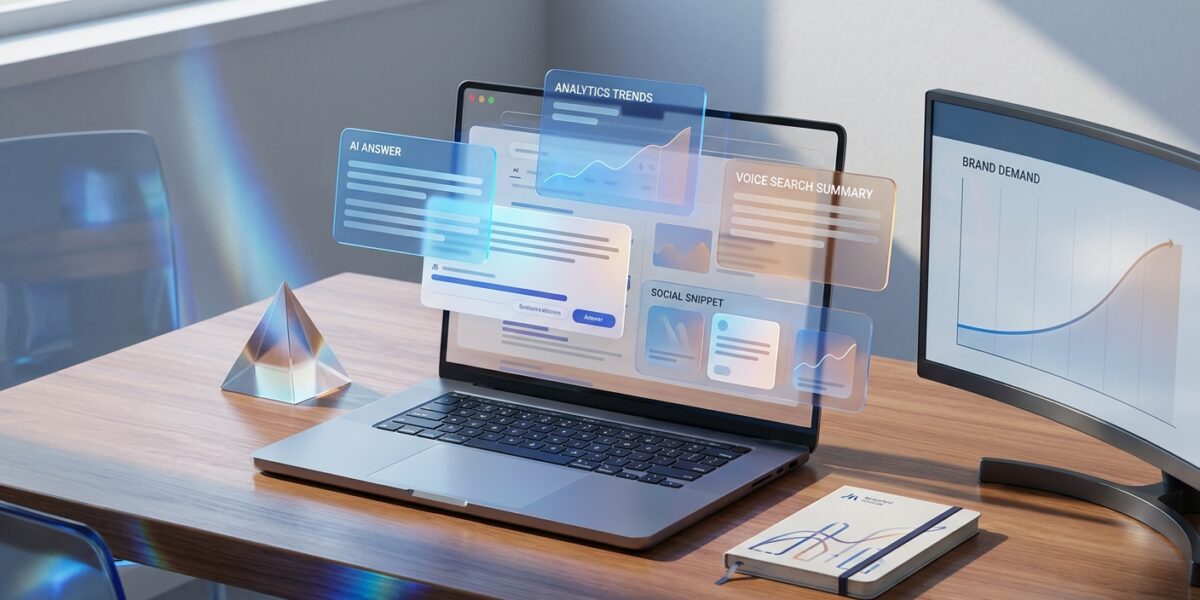
If more people search your name later, mention your company in a sales call, remember your founder, or trust your point of view before they ever land on your site, your marketing is working even if GA4 cannot tell the full story cleanly.
That is why Amanda Natividad wrote in If Search Captures Demand, Public Evidence Creates It that the channel capturing demand is not always the one creating it. That is one of the best single-sentence explanations of modern marketing I have seen.
2. Public Evidence
AI systems, Google, and buyers all evaluate the public record around your brand. That includes your site, but also your reviews, your mentions, your citations, your thought leadership, your Reddit presence, your interviews, and your reputation. That idea overlaps a lot with what I covered in GEO Is Simpler Than People Want to Admit. Good SEO still matters. Brand distribution matters more than people want to admit.
3. Measurement
Rand has been making this point for years: hard-to-measure channels are still real channels. In SparkToro’s piece on measuring hard-to-measure marketing, he recommends watching direct traffic, branded search volume, social referral, and conversion-rate shifts instead of pretending last-click reports tell the whole truth.
That lines up with what I see in practice. Sometimes a campaign helps the sale, but the form submission gets attributed to branded search, direct, or returning traffic. The spreadsheet makes the wrong hero out of the final touchpoint.
4. Search Still Matters
None of this is an argument to stop doing SEO. It is an argument to stop expecting SEO to carry the full demand-generation load by itself.
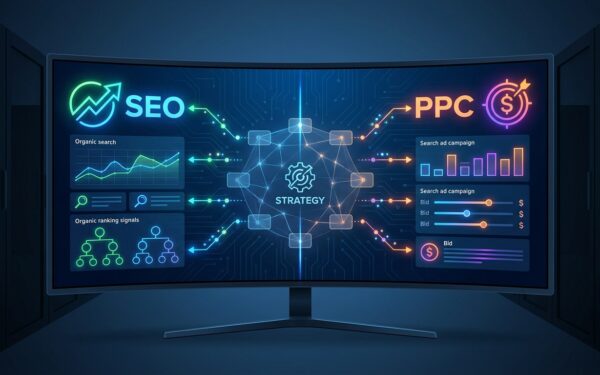
If your site is technically weak, your content is generic, and your brand has no public proof, zero-click marketing will not save you. It works best when it sits on top of solid SEO, real positioning, and credible expertise. That is also why posts like AI Overviews Are Destroying Organic Click-Through Rates and SEO and PPC: How to Use Organic Search to Make Every Paid Click Smarter still matter. You still need search demand capture. You just need more than that now.
What Small Business Teams Should Do Right Now
If you are not an enterprise brand with a huge content team, don’t overcomplicate this.
Start here:
- Publish at least one strong native insight per week. Give away the useful part in the post, video, email, or thread itself.
- Turn your best thinking into platform-specific formats. A blog post can become a LinkedIn post, short video, email note, quote graphic, and podcast talking point.
- Track branded search and direct traffic. If those trend up while platform-native content output improves, that signal matters.
- Invest in public proof. Reviews, case studies, testimonials, third-party mentions, citations, and founder POV all help.
- Make your site worth citing. Clear definitions, original framing, useful examples, and strong information architecture still help both humans and machines.
That last point is where zero-click marketing connects back to SEO. The audience may not click the first time. But the better your public evidence and content quality, the more likely you are to be remembered, searched, cited, and chosen later.
My Take
I don’t see zero-click marketing as an anti-traffic philosophy. I see it as a more honest one.
Clicks still matter. Rankings still matter. Your site still matters. But if your entire strategy depends on being the destination for every first interaction, you’re fighting how the internet actually works now.
Zero-click marketing is really a bet on memory, trust, and brand penetration. The first exposure may happen in a feed, in an AI answer, in a quote, in a review, or in a LinkedIn post that never sends a visit. The payoff comes later when the person searches your name, replies to your post, joins your list, books a call, or chooses you over the generic competitor they forgot five minutes after reading them.
That is not fake performance. That is real influence.
Tomorrow, on Wednesday, May 27, 2026, I’m going deeper into the actual strategic layer: brand penetration, indirect and direct SEO effects, LLM seeding, and where PPC fits into this. Then on Thursday, May 28, 2026, I’ll break down what a small business team can realistically do versus what enterprise teams can afford to build.
Frequently Asked Questions
What is zero-click marketing in plain English?
It is marketing that creates awareness, trust, and demand without depending on an immediate website visit. The audience gets value where they already are, and the click may happen later or not at all.
Is zero-click marketing the same thing as SEO?
No. SEO is one part of it. Zero-click marketing is broader because it includes native social content, branded search demand, AI visibility, reviews, podcasts, email, communities, and other public signals that influence buyers before they click.
How do you measure zero-click marketing if there is no click?
Watch leading indicators like branded search growth, direct traffic, assisted conversions, follower growth, email subscribers, reply quality, review velocity, and close-rate improvement on branded or returning visitors. Don’t rely only on last-click attribution.
Can a small business actually do zero-click marketing?
Yes. A small team can do this better than a slow enterprise in some cases because it can publish faster, show more personality, and turn one strong idea into multiple native formats without waiting for committee approval.
Does zero-click marketing mean blog content is less important now?
No. It means your blog should work as a source of authority, evidence, and repurposable ideas, not just as a traffic trap. Your site becomes the canonical depth layer behind the native content.
Sources
- Damn Gravity: Zero Click Marketing preorder page
- SparkToro + Datos: 2024 Zero-Click Search Study
- SparkToro: Zero-Click Content
- SparkToro: If Search Captures Demand, Public Evidence Creates It
- SparkToro: How to Measure Hard-to-Measure Marketing Channels
- Google: 5 new ways to explore the web with generative AI in Search
- Google: Search I/O 2026 updates
- Ahrefs: AI Overviews Reduce Clicks by 58%