
Most businesses still ask the wrong question.
They ask whether SEO or PPC is better, where budget should go first, or which channel delivers faster results. That framing misses the real opportunity. The smart question is this: how do SEO and PPC make each other better?
That is where search marketing gets interesting.
PPC is fast. It can create demand, test offers, and put you in front of buyers this week. SEO is slower, but it does something paid media cannot do on its own. It shows you how people search when they are not being pushed. It reveals the language real buyers use, the questions they ask before they are ready, and the pages that naturally earn trust.
If you use that organic search intelligence correctly, every paid click gets smarter.
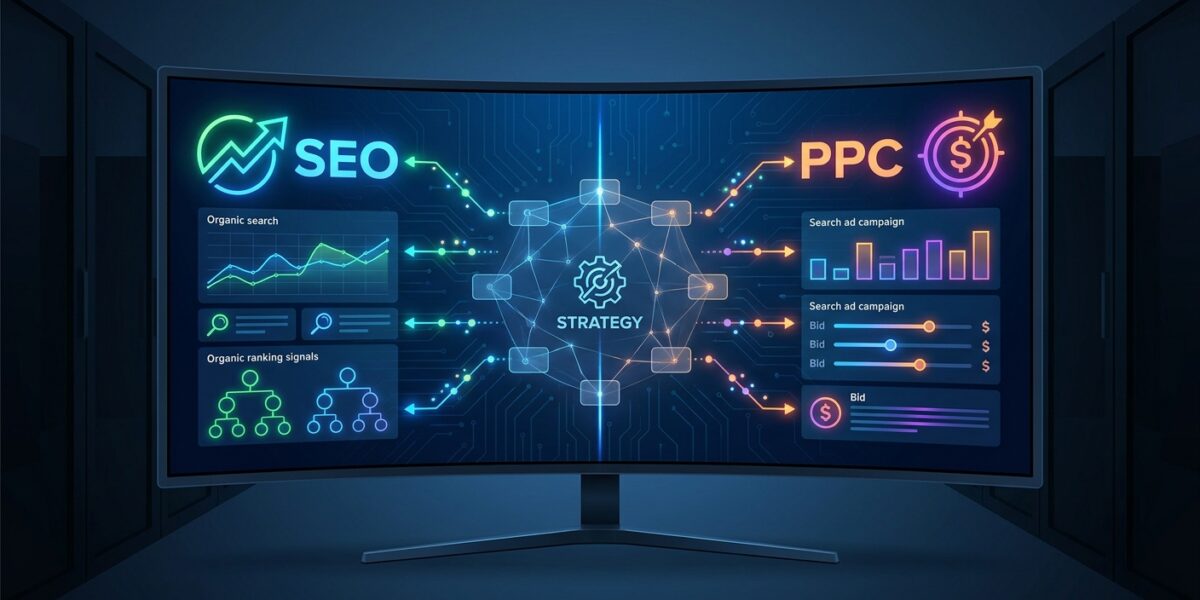
Google’s own overview of SEO vs. PPC treats them as complementary, not mutually exclusive. That is the evergreen takeaway most teams still ignore. SEO should not sit in one silo while PPC sits in another. SEO should act like the intelligence layer for your whole search strategy.
TL;DR
- SEO and PPC work better together than they do apart.
- Organic search data shows how real buyers phrase problems, compare options, and signal intent.
- That insight can improve paid targeting, ad copy, landing pages, and budget allocation.
- PPC can then feed faster messaging and offer data back into SEO.
- The brands that win are usually the ones that connect both channels instead of managing them in silos.
Table of Contents
- Why SEO Makes PPC Better
- Where PPC Makes SEO Better
- The Practical SEO and PPC Workflow
- When to Lean Harder on One Channel
- The Better Question
- Frequently Asked Questions
SEO should not just drive traffic. It should make every paid decision sharper.
Why SEO Makes PPC Better
The simplest way to think about it is this: PPC buys attention, but SEO explains intent.
When you study organic search performance in Google Search Console, you can see which queries are generating impressions, which pages are pulling clicks, and where your site is already close to winning. That matters because paid search performs better when the account structure, ad copy, and landing pages are aligned with the way people actually search.
This is why I tell people to start with the search behavior, not the ad platform.
I have seen this firsthand with local service businesses and B2B accounts. The campaigns usually get cheaper and convert better once the landing pages, offers, and ad language start reflecting what buyers were already telling us through organic search.
If a page is already earning impressions for a useful theme, that is a signal. It means Google is already associating your brand with that topic. That can shape your PPC campaigns in at least four ways.
1. SEO exposes the vocabulary buyers really use
Marketers love internal language. Buyers do not.
A service company might talk about integrated demand generation, conversion architecture, or revenue operations. The buyer might simply search for how to get better leads from google ads or why is my seo traffic not converting.
That difference matters.
Organic search data helps you find the plain-English phrases buyers actually type. You can use that language in your paid headlines, descriptions, asset groups, and landing pages. If you want a practical starting point, my guide on finding quick-win keywords in Search Console is the exact process I use to surface those patterns.
2. SEO helps you build landing pages that match intent
Google still evaluates ad quality partly through expected click-through rate, ad relevance, and landing page experience in its guidance on ad quality and Quality Score and using Quality Score to guide optimizations. In other words, your ads do not win on bidding alone. They win when the destination feels useful and aligned with the search.
This is where good SEO work has a second life.
The pages that rank organically usually do a better job matching intent, covering subtopics, and answering follow-up questions. Those same strengths improve paid performance. If your PPC landing page feels thin, vague, or disconnected from the query, you will usually see it in both conversion rate and cost efficiency.
That is why PPC teams should be reading SEO pages, not just ad reports.
I made a similar point in my post on Google Ads Quality Score. Better landing pages are not just a paid media problem. They are a search intent problem.
3. SEO tells you which topics deserve paid acceleration
Not every keyword deserves a budget.
One of the cleanest uses of SEO is identifying which topics already show signs of traction, then using PPC to accelerate the commercial terms around them. If organic content tells you that a certain pain point gets attention, paid search can help you own the bottom-of-funnel version of that same topic.
For example, an SEO article may rank for an educational query. That does not mean you should stop there. It may mean you should build a paid campaign around the action-oriented version of that need.
This is also where topical authority matters. A site with strong supporting content tends to produce stronger landing pages, better message match, and clearer conversion pathways. I broke that down in Content Clusters: How to Build Topical Authority That Google Rewards.
4. SEO protects you from buying the wrong traffic
A lot of companies think they have a traffic problem when they really have a qualification problem.
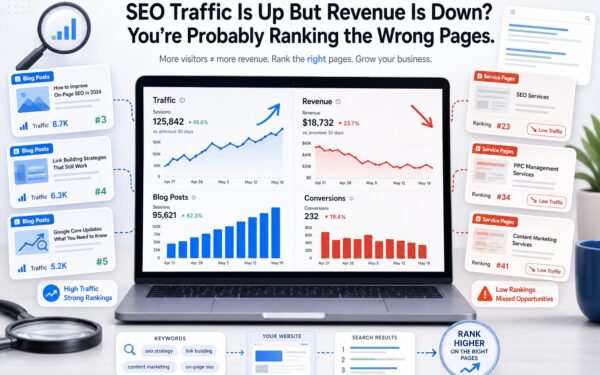
They drive visits, impressions, and clicks, then wonder why revenue does not move. Sometimes the issue is not volume. It is that the wrong pages are attracting the wrong intent.
That problem shows up in organic search all the time, and it absolutely spills into paid. If you do not know which pages are bringing in useful visitors versus curiosity clicks, you can waste a lot of budget reinforcing the wrong pattern.
That is why attribution has to sit inside the same conversation. Search is not just about ranking or click costs. It is about which visits lead to pipeline, leads, calls, demos, and revenue. My multi-channel attribution guide covers how to measure that without fooling yourself, and my piece on SEO traffic up but revenue down gets into what happens when search performance looks good on paper but weak in the bank account.
Where PPC Makes SEO Better
This is not a one-way relationship.
PPC can improve SEO too, especially when you use ads as a controlled testing environment.
Paid search lets you test headlines, offers, and calls to action faster than organic search ever will. It gives you cleaner feedback on which messaging gets clicked and which page angles convert. Once you see those patterns, you can bring them back into your organic titles, introductions, page structure, and content hierarchy.
That is one reason I do not believe in a clean wall between channels. Search behavior does not care how your org chart is arranged.
The Practical SEO and PPC Workflow
If you want a durable workflow instead of a theory piece, this is the one I recommend:
Start with organic query intelligence
Pull Search Console query and page data. Look for:
- pages with high impressions but weak click-through rate
- keywords sitting just outside the strongest positions
- pages attracting the right traffic but not enough of it
- recurring modifiers that signal buying intent
Build paid campaigns around proven intent
Use those patterns to decide:
- which offers deserve paid spend
- how tightly to structure ad groups or themes
- what language belongs in headlines
- which landing pages need to exist before you spend
If you need the plain-English version of the paid side, my PPC beginner guide is a good companion piece.
Feed paid results back into SEO
Once the ads run, study:
- which headlines get clicked
- which offers convert
- which objections show up on calls or forms
- which page sections people actually engage with
Then rewrite the organic content using that feedback.
That loop is how search marketing compounds.
When to Lean Harder on One Channel
There are still cases where one channel should lead.
If you need leads fast, PPC usually leads and SEO supports. If you are building long-term defensibility, SEO usually leads and PPC supports. If you are entering a new market, PPC can test viability before you invest heavily in content. If you already have strong organic traction, PPC can help you capture more high-intent demand around your proven topics.
The mistake is assuming either one should operate alone.
The Better Question
The debate is not really SEO vs. SEM.
The better question is whether your search strategy is connected or fragmented.
If SEO is just publishing blog posts and PPC is just buying clicks, you will keep paying to relearn what your own organic data could have told you for free. But if SEO becomes the intelligence layer for your paid search, landing pages, offer strategy, and attribution model, search stops being a set of channels and starts becoming a system.
That is where smaller brands can still win.
The big players often have more budget. They do not always have better coordination. If you can connect organic intent, paid testing, and conversion tracking faster than they can, you can outperform them in the margins that actually matter.
That is the real evergreen lesson.
SEO is not just there to drive traffic.
It is there to make every other search decision smarter.
Frequently Asked Questions
Is SEO better than PPC?
It depends on the goal. PPC is usually better when you need leads quickly or want to test offers fast. SEO is better when you want compounding visibility, lower acquisition costs over time, and a stronger content moat.
Should small businesses invest in SEO and PPC at the same time?
Usually yes, but not equally. Most small businesses benefit from using PPC for immediate demand capture while building SEO around the topics, services, and questions that matter most long term.
How does SEO improve PPC performance?
SEO improves PPC by revealing real search language, surfacing high-intent topics, and showing which landing page angles already align with user intent. That makes paid campaigns more relevant and often more efficient.
What is the difference between SEO, PPC, and SEM?
SEO focuses on unpaid organic visibility. PPC focuses on paid clicks. SEM is the broader umbrella that includes both SEO and paid search strategy.
Sources
- Google Ads: SEO vs. PPC
- Google Search Central: SEO Starter Guide
- Google Search Console Help: Performance report
- Google Ads Help: About ad quality
- Google Ads Help: Using Quality Score to guide optimizations
- Google Ads Help: About Ad Rank
- Google Analytics Help: Get started with attribution