

Every week I talk to service business owners — contractors, attorneys, med spas, HVAC companies — who have no idea that a few hundred lines of invisible code could be the difference between showing up in Google’s map pack with star ratings and showing up nowhere at all. Structured data, specifically schema markup, is one of those technical SEO concepts that sounds intimidating but pays off faster than almost anything else I implement for clients at Yellow Jack Media.
Let me be direct: structured data is code you add to your website that tells search engines — and increasingly AI systems — exactly what your business is, what it does, who it serves, and why it should be trusted. It doesn’t change what visitors see on your page. It changes what Google sees underneath it. And in 2026, after Google’s March core update rewrote the rules on rich results, getting this right matters more than ever.
This post is the practical guide I wish existed when I started implementing schema for local service businesses. We’re going to cover the schema types that actually move the needle, the ones Google killed off, and exactly how to implement JSON-LD without breaking a sweat.
Why Schema Markup Matters More in 2026
I remember when schema was treated like a nice-to-have — something you’d add if you had spare development hours. That era is over. Google now processes over 8.5 billion queries daily, and a significant portion of those results are shaped by structured data powering rich snippets, knowledge panels, and AI-generated answer summaries.
Sites with properly implemented structured data consistently achieve 20–30% higher click-through rates through rich results like star ratings, business hours, and price ranges displayed directly in search. That’s not a small edge — that’s the difference between a prospect clicking your listing or your competitor’s.
“Schema markup has shifted from an optional SEO tactic to a core business growth lever, fueling SEO rich results, AI citations, and reduced hallucinations while building E-E-A-T trust.”
— Amy-Leigh Idas, Content Strategist, Entail AI (August 2025)
Here’s what makes this especially urgent for service businesses specifically: Google’s March 2026 core update tightened rich result eligibility to 31 schema types and eliminated a lot of the shortcuts people were abusing. If your schema strategy was built around FAQ padding or How-To markup on pages where it didn’t belong, you lost ground. But if you implement the right types correctly, you’re now competing against fewer businesses doing it properly — which is a real opportunity.
The Schema Types That Actually Get Rich Results
Not all schema is created equal. After years of testing across service business clients — from roofing companies to law firms to physical therapy practices — these are the types I implement first and why.
LocalBusiness Schema (and Its Subtypes)
This is the foundation for any service business with a physical location or defined service area. LocalBusiness schema, when implemented with complete NAP data (name, address, phone), geo-coordinates, service area, price range, and AggregateRating, is your best path to appearing in Google’s local map pack.
The subtypes matter enormously. Google recognizes specific subtypes like Attorney, MedicalBusiness, HomeAndConstructionBusiness, Plumber, and dozens more. Using the most specific subtype signals relevance to Google’s categorization system. I had a client — a family law attorney in Orlando — who saw a measurable increase in map pack appearances within six weeks of switching from generic LocalBusiness to the Attorney subtype with complete supporting properties.
For AggregateRating to display as stars in search results, you need a minimum of five genuine reviews. Don’t fake them — Google cross-references your schema data against your Google Business Profile, and inconsistencies hurt more than they help. Speaking of which, if you haven’t gone through a complete Google Business Profile optimization process, do that before or alongside your schema implementation.
Organization Schema
Organization schema is what tells Google — and AI systems like Google’s AI Mode — who you are as an entity, not just where you’re located. This includes your official business name, logo, founding date, contact points, and critically, SameAs identifiers.
The SameAs property links your schema to your profiles on authoritative platforms: your Google Business Profile URL, your LinkedIn company page, your Yelp listing, your BBB profile. This process is called entity disambiguation, and I’ll go deeper on why it matters in the section below. For now, understand that Organization schema with complete SameAs identifiers is what gets your business accurately represented in AI-generated answers, not just traditional search results.
Service Schema
Most service business websites have individual pages for each service they offer — HVAC installation, AC repair, maintenance plans. Each of those pages deserves its own Service schema block. Pair it with an Offer schema to include pricing or pricing ranges, and optionally a Review schema for service-specific testimonials.
What I see competitors skipping constantly is the areaServed property inside Service schema. This tells Google exactly which cities, counties, or zip codes you serve — which is critical for ranking in searches like “AC repair near me” from someone 20 miles from your physical address. If you’re curious about how this connects to broader local visibility strategy, my post on multi-surface visibility and why ranking #1 isn’t enough covers the full picture.
Review and AggregateRating Schema
Star ratings in search results are one of the highest-CTR features available to service businesses. The catch is that Google only displays them when your markup is legitimate — meaning the reviews are real, on-page, and the aggregate score matches what’s actually being displayed to users.
Don’t implement AggregateRating schema on a page that doesn’t actually show reviews. Post-March 2026, Google is aggressively filtering schema that doesn’t match the primary content intent of the page. If your reviews live on a dedicated testimonials page, put your AggregateRating schema there — or build a proper reviews section into your service pages.
JSON-LD: The Format Google Prefers
There are three ways to implement schema markup: JSON-LD, Microdata, and RDFa. Google’s official documentation recommends JSON-LD, and in my experience it’s the only format worth using for service businesses. Here’s why.
JSON-LD lives in a <script> tag in your page’s <head> or <body>. It’s completely separate from your visible HTML. That means your developers can update it without touching your design, and you can validate it independently without worrying about breaking page layout. Microdata and RDFa are woven into your HTML attributes — a nightmare to maintain and audit.
Here’s a simplified example of what LocalBusiness JSON-LD looks like for a plumbing company:
“Accurate schema that matches page content increases AI citation probability independent of traditional rich result display.”
— Digital Applied, SEO Research Analysis (2026)
Once you’ve written your JSON-LD, run it through Google’s Rich Results Test before pushing it live. This tool tells you exactly which rich result types your markup qualifies for and flags any errors. I run every client’s schema through this tool monthly — it catches issues before they become ranking problems.
What Google Killed in March 2026 (And Why It Matters)
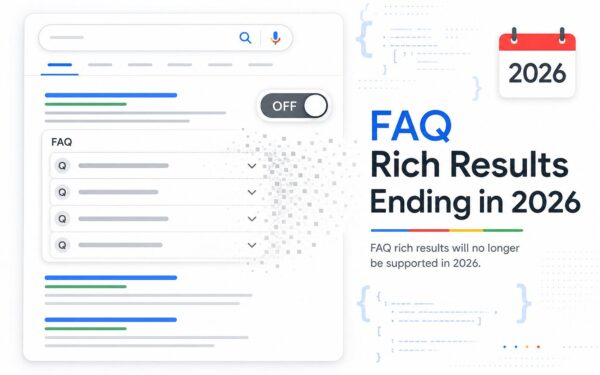
The March 2026 core update was significant for structured data. Google reduced FAQ rich result impressions by nearly half and eliminated How-To rich results on pages where that content wasn’t the primary purpose. If your service pages had FAQ accordion sections with schema just to grab extra SERP real estate, that tactic is done.
I’ve written a full breakdown of what changed in the March 2026 Google core update and what to do now — worth reading alongside this post. The short version for schema specifically: Google is now only rewarding schema that matches the primary intent of the page. A service page for “kitchen remodeling” should have Service schema. An FAQ page can have FAQ schema. Don’t mix them manipulatively.
The businesses that lost ground in March 2026 were the ones who treated schema as a trick rather than a communication tool. The businesses that gained ground were the ones whose schema accurately described what was on the page — and those businesses are now your competition.
The Schema Signal Everyone Is Ignoring: Entity Disambiguation
Here’s the angle I almost never see covered in schema guides for service businesses, and it’s the one I’m most excited about right now: using schema specifically to help AI systems correctly identify and cite your business.
Google’s AI Mode, AI Overviews, and third-party AI tools like ChatGPT and Perplexity are increasingly answering local service queries directly. “Who’s the best HVAC company in Orlando?” is now a question AI systems answer — and they pull from entity data to do it. If your Organization schema doesn’t include SameAs identifiers connecting your website to your authoritative profiles, AI systems may misidentify your business, cite a competitor, or simply skip you.
The fix is straightforward. In your Organization schema, include sameAs as an array of URLs pointing to your Google Business Profile, LinkedIn, Yelp, BBB, and any industry-specific directories relevant to your field. Make sure your business name, address, and phone number are identical across all of them — character for character. This consistency is what allows Google’s entity resolution system to confidently say “yes, this website and this GBP listing and this Yelp profile are all the same business.”
I’ve seen this work in practice. A med spa client in Central Florida started showing up in AI Overview answers for treatment-related queries within two months of implementing complete Organization schema with SameAs identifiers — queries where they had no traditional ranking. The data on AI Overviews and organic CTR is complicated, but for local service businesses, appearing in AI-generated answers is becoming a primary visibility channel, not a secondary one.
Your Implementation Checklist
Before I wrap up, here’s the practical order of operations I use when implementing schema for a new service business client:
- Audit existing schema using Google’s Rich Results Test and Schema.org’s validator — find what’s broken or missing
- Implement Organization schema site-wide in the
<head>with complete NAP, logo, SameAs identifiers, and contact points - Add LocalBusiness schema (most specific subtype) to your homepage and contact page with geo-coordinates, service area, hours, and priceRange
- Add Service schema to each individual service page with areaServed, description, and an Offer block if you list pricing
- Add AggregateRating schema only to pages that actually display reviews — don’t fake it
- Validate everything in Google’s Rich Results Test and fix all errors before going live
- Monitor Search Console under Enhancements to track rich result impressions and click-through rates over 60–90 days
The whole process typically takes my team 4–6 hours for a service business with 10–20 pages. The ROI on that time investment, measured in CTR improvement and local pack appearances, is consistently one of the best returns in technical SEO.
Frequently Asked Questions
Does schema markup directly improve my Google rankings?
Schema markup is not a direct ranking factor in Google’s algorithm. What it does is make your content eligible for rich results — star ratings, price ranges, business hours in search — which increase click-through rates significantly. Higher CTR sends positive engagement signals to Google, which can indirectly support rankings over time. Think of schema as improving your search result’s appearance, not its position.
Which schema type is most important for a local service business?
Start with LocalBusiness schema using the most specific subtype that matches your industry. This is the primary schema type that supports map pack appearances and local rich results. Follow it immediately with Organization schema for entity disambiguation and AI citation accuracy.
Can I use multiple schema types on the same page?
Yes, and for service businesses you often should. A service page can legitimately have Service schema, Offer schema, and AggregateRating schema together. What Google penalizes is using schema types that don’t match the page’s primary content — like adding FAQ schema to a page whose main purpose is selling a service, not answering questions.
What’s the difference between JSON-LD and Microdata for schema?
JSON-LD is a separate script block that doesn’t touch your visible HTML. Microdata is embedded directly into your HTML attributes. Google recommends JSON-LD because it’s easier to implement, audit, and maintain. Unless you’re working on a legacy system that requires Microdata, always use JSON-LD.
Resources
- Google Search Central: Introduction to Structured Data — Official documentation on how Google uses schema markup
- Google Rich Results Test — Validate your schema and check rich result eligibility
- Schema.org LocalBusiness — Full property reference for LocalBusiness and all subtypes
- Moz: Schema Structured Data Guide — Practical overview of structured data for SEO practitioners
- Search Engine Land: Structured Data SEO Guide — Industry analysis of schema’s impact on modern search
Technical SEO cluster: Structured data works best when it is part of a broader audit process. Start with my technical SEO audit checklist, then use this schema guide to tighten page understanding and rich-result eligibility.