
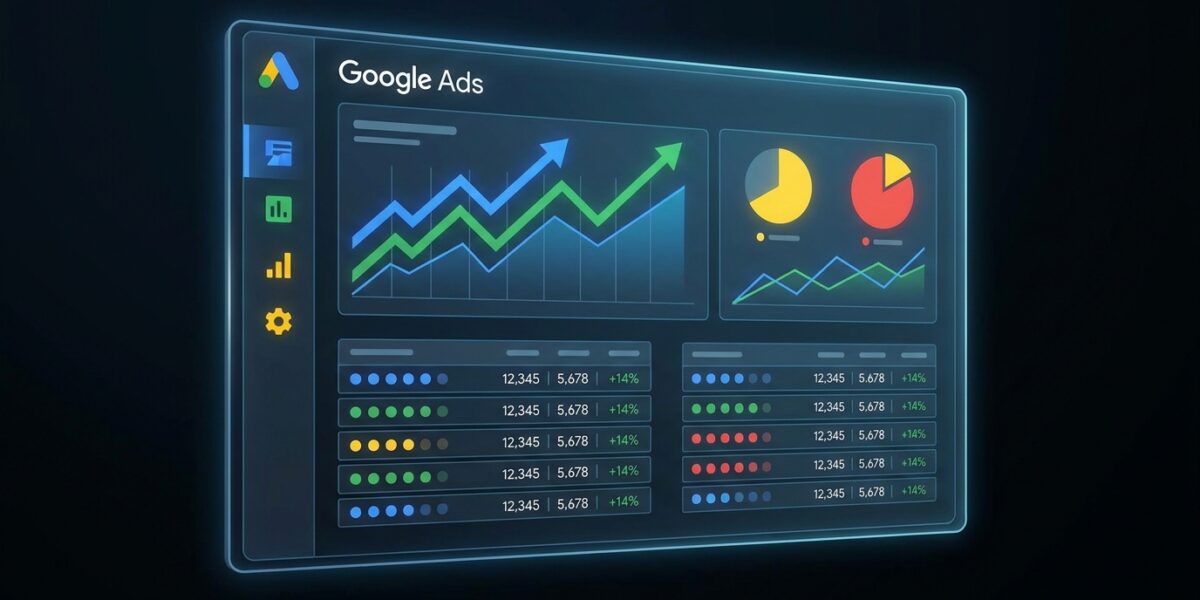
Google just made the quiet part loud. On April 15, they announced that Dynamic Search Ads are being replaced by AI Max — and if you’re still running DSAs, you have until September before Google does it for you.
I’ve been managing Google Ads accounts for years, and this is one of those changes that looks minor on the surface but reshapes how you run campaigns underneath. Here’s what’s actually happening, what it means for your account, and what I’m doing about it right now.
What Google Announced (The Short Version)
Three legacy Google Ads features are getting sunset in favor of AI Max:
- Dynamic Search Ads (DSA) — the catch-all campaign type that matched queries based on your website content
- Automatically Created Assets (ACA) — Google’s old system for auto-generating headlines and descriptions
- Campaign-level broad match — the option to apply broad match across all keywords in a campaign
Phase 1 started this week: voluntary migration with tools to port your settings. Phase 2 starts September 2026: automatic upgrade for everything still on the legacy systems. If you wait, you lose control over how the transition happens.
Google’s official announcement is on their Ads & Commerce blog.
What AI Max Actually Does Differently
DSAs matched queries to your landing page content. AI Max goes further — it uses real-time intent signals beyond your site to find queries you’d never target manually. Google says advertisers using the full AI Max suite see 7% more conversions at similar CPA/ROAS compared to search term matching alone.
AI Max combines three capabilities:
- Search term matching — AI-powered query discovery beyond keywords and landing pages
- Text customization — automatic headline and description generation tailored to each query
- Final URL expansion — dynamic landing page selection based on relevance signals
Sound familiar? It should. This is essentially what Performance Max did for display and video, now applied to Search. Google is consolidating everything under AI-driven campaign types.
The Risks Nobody’s Talking About
1. Budget Bleeding in the First 30 Days
AI Max casts a wider net than DSA. If your negative keyword strategy isn’t tight, expect wasted spend on irrelevant queries during the initial learning period. I’ve seen this pattern with every Google automation rollout — the algorithm needs data, and your budget pays for it.
What to do: Build out your negative keyword lists aggressively before you migrate. Pull your search terms report from the past 90 days and add everything irrelevant as a negative.
2. Brand Safety Gets Better (But Test It)
The good news: AI Max includes controls that DSA never had. Brand restrictions, location controls, and “text guidelines” to steer the AI’s creative output. These are genuine improvements. But don’t assume they work perfectly out of the box — test them before your migration.
3. Reporting Is Finally Getting Better
Google has improved Performance Max and AI Max reporting significantly in 2026. Channel-level reporting and asset-level segmentation make it easier to understand where spend is going. If you’ve been frustrated by PMax’s black-box reporting, AI Max is a step in the right direction.
The 5-Step Migration Plan I’m Using
Here’s exactly what I’m doing for every account I manage:
Step 1: Audit Every DSA Campaign This Week
Pull the last 90 days of data. Which DSAs are driving profitable conversions? Which are bleeding budget? Kill the underperformers before the migration — there’s no point migrating campaigns that aren’t working.
Step 2: Export Your Search Terms Data
Your DSA search terms report is gold. Once the migration happens, that historical data may not transfer cleanly. Export it now. You’ll need it for negative keyword lists and to understand which queries were actually working.
Step 3: Tighten Negative Keywords
Go through 90 days of search terms. Add negatives for anything that’s not relevant. Pay special attention to:
- Job-seeker queries (“jobs,” “careers,” “hiring”)
- Informational queries that never convert (“how to,” “what is”)
- Competitor brand terms (unless you’re deliberately targeting them)
- Geographic mismatches
Step 4: Voluntary Migrate One Campaign First
Don’t migrate everything at once. Pick your best-performing DSA campaign and migrate it voluntarily this week. Monitor it for 2 weeks. Compare performance before and after. Then migrate the rest based on what you learn.
Step 5: Set Up AI Max Controls
Before going live, configure:
- Brand restrictions (include/exclude specific brands)
- Location targeting (AI Max respects your geo settings but verify)
- Text guidelines (steer the AI’s creative direction)
- Budget caps (set daily budgets 20% lower than your DSA budget during the learning period)
What This Means for the Bigger Picture
This isn’t just about DSAs. This is Google’s final push to make manual keyword management optional. Between AI Max, AI Mode ads, and Performance Max, Google is building an ad platform where the algorithm does the targeting and your job is to feed it good creative, landing pages, and conversion data.
That’s not necessarily bad. The 7% conversion lift is real for advertisers who set it up correctly. But “correctly” means having strong conversion tracking, tight negative keyword lists, and landing pages that actually convert. If your fundamentals are weak, AI Max will just automate your losses faster.
My Take
I’m not panicking about this, and neither should you. DSAs were always a blunt instrument — they caught queries you missed, but they also wasted money on garbage traffic. AI Max is a smarter version of the same idea.
The advertisers who’ll struggle are the ones who set up DSAs three years ago and never looked at the search terms report. If that’s you, the next 90 days are your window to clean house before the migration forces your hand.
Start auditing. Start building negatives. Migrate voluntarily. The September deadline isn’t optional — your preparation for it should be.
Want me to audit your Google Ads account before the AI Max migration? Get in touch — I’m doing these audits through the summer.