My father’s family is Cuban. He left everything behind when the Castro regime made it clear that staying meant surrendering your future — and probably your freedom. So when I read the testimonies coming out of Havana this week, I don’t read them as news. I read them as a family history that never ended.
This week, Diario de Cuba — the Madrid-based outlet that has been one of the most reliable independent voices on the island for years — published harrowing accounts from residents of Havana describing a systematic new form of police repression. The Castro regime, facing its most severe isolation in decades after losing Venezuelan oil shipments, has issued what sources describe as a “new order of battle.” The objective: beat Cubans back into their homes before they can protest in the dark.
Why the Dark Matters
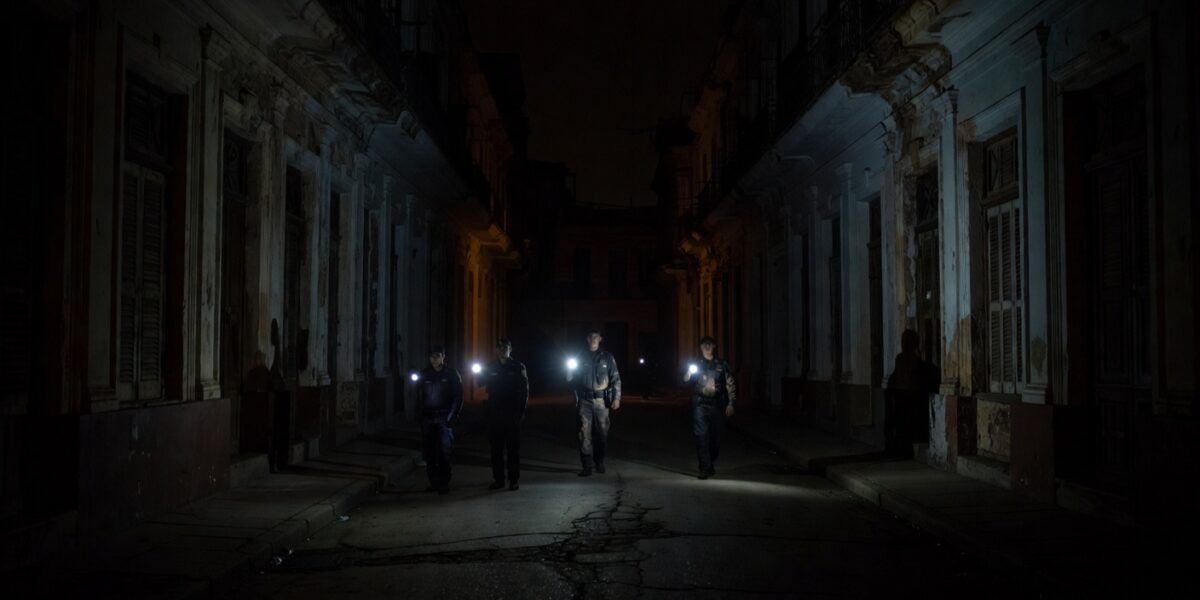
Cuba’s power grid has been collapsing for months. Rolling blackouts — sometimes 10 to 16 hours a day — have become a fixture of daily life. But Cubans found something in the darkness that the regime didn’t anticipate: cover. During blackouts, when security cameras go dark and visibility drops to near zero, ordinary Cubans began taking to the streets. Banging pots and pans. Starting fires. Chanting against the regime. It’s been happening in Havana, in Santiago de Cuba — across the island.
The regime noticed. And their response was not to restore power. It was to beat people who went outside.
The Testimonies
These are not allegations. These are first-person accounts published by Diario de Cuba, names included where people were willing, pseudonyms where fear demanded it. Here is what they described:
“El Chino” — a man who asked to be identified only by nickname — was beaten by police officers who stopped him while he was going out to buy cigarettes. He refused a search. They took him to a police station in central Havana and charged him with “resisting arrest.” “No drugs or any other evidence were found on El Chino that would justify the search, the beating, the arrest, or the charges. They took him to a hospital solely to perform a blood test, even though he was bleeding from his head and nostrils,” the outlet reported. His family found him at the station with a swollen face and bloodstained clothes.
Damián Conesa told Diario de Cuba he was beaten by half a dozen police officers while walking through the Príncipe district during a blackout — accused of “smelling like alcohol.” He said: “It is fear that keeps you from setting foot on the street at night or in the early morning. The government claims that the protests against the blackouts are led by people who are drunk or under drugs. That is the ordinance — if the police stops you and you have alcohol on your breath or are behaving erratically, you are suspected of disturbing the peace or being prone to protesting.”
Alexander Vizcaíno went outside to take out his trash. He ended up at the police station, badly beaten, accused of trying to set fire to a trash pile and damage an underground cable. He didn’t have his ID card on him. Neighbors vouched for him. The officers threatened the neighbors and started beating him. His conclusion: “There are those who claim that the end of the government is near, and I believe it, because this sort of ‘curfew’ seems, as the saying goes, like one of the last death throes of a hanged man.”
Yanisey Travieso‘s husband was beaten after going out on an urgent errand at midnight. She described the regime’s propaganda strategy: when they have to cover the protests on state television, they always show footage of “drunks, drug addicts, and criminals” — manufacturing a pretext to justify the police crackdowns. “These are not isolated incidents. It is a new form of police repression that leaves you with no options: on the one hand, crime and social violence, and on the other, unscrupulous police repression that resorts to brute force and lies,” she said.
What This Is Really About
The Castro regime lost its Venezuelan oil lifeline in January 2026 when the United States arrested Nicolás Maduro. For over two decades, Venezuela had been supplying Cuba with virtually free oil in exchange for Cuban security services propping up the Maduro regime. That deal is over. The Cuban Communist Party is now, as Diario de Cuba puts it, in “unprecedented isolation.”
That isolation is producing two things simultaneously: an escalating popular revolt and an escalating repressive response. The regime is not reforming. It is tightening. When a dictatorship’s back is against the wall, it doesn’t open its hands — it closes its fist.
My Take
This is what socialism does at the end. It doesn’t go quietly. It beats people who take out their trash. It charges a man with “resisting arrest” for refusing to be searched when he was buying cigarettes. It makes going outside at midnight — for any reason — an act of political defiance punishable by a split skull and a police station overnight.
My father’s generation left Cuba carrying this knowledge in their bones. My generation grew up hearing it across dinner tables in Florida. And now the world is watching it happen in real time, broadcast through independent media that the regime can’t fully silence.
The Cuban people are not waiting to be liberated. They are already in the streets — or they were, until the beatings started. What they need is the world paying attention and not looking away. Not sending delegations of American activists to Havana to protest the embargo while staying in air-conditioned hotels and ignoring the blood on the sidewalks.
The darkness in Havana is not just a power outage. It is a metaphor the regime made literal. And the Cubans banging pots in that darkness — before the police came — deserve to be heard.
Sources: Breitbart / Diario de Cuba testimony report | 2024–2026 Cuba Blackouts, Wikipedia | Diario de Cuba (primary source reporting, Madrid)