

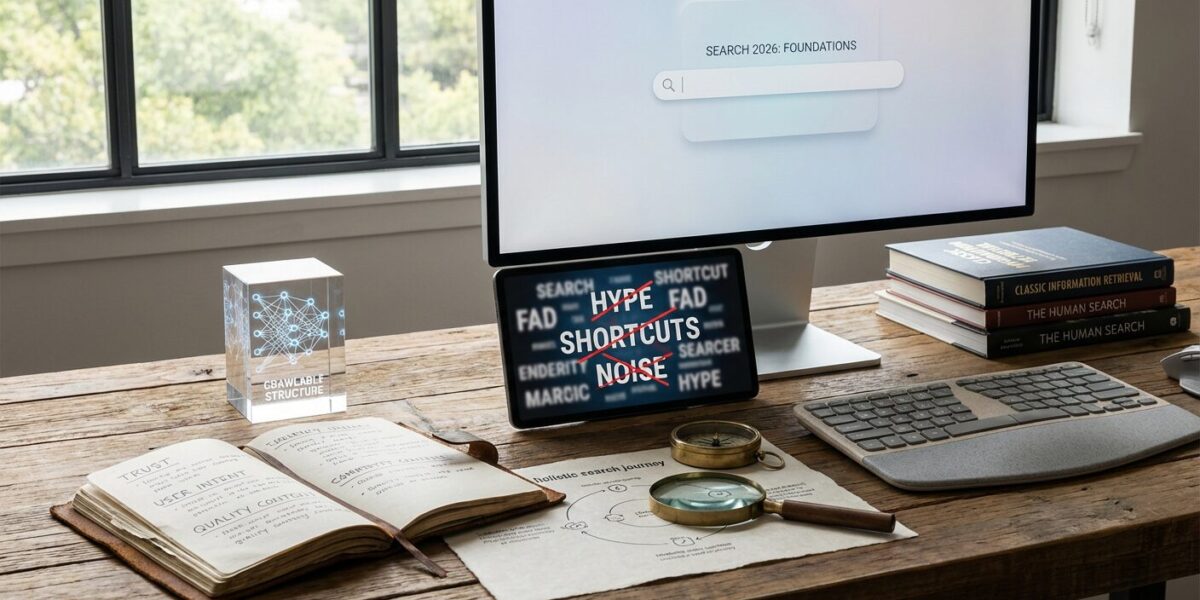
After two decades in SEO, I’ve watched countless “game-changing” trends come and go. Right now, everyone’s talking about AI Overviews, zero-click searches, and how SEO fundamentals 2026 are supposedly different from everything we’ve known. But here’s the truth about SEO trends vs basics: while the surface keeps changing, the core of what works in SEO remains remarkably consistent.
I remember when everyone said voice search would kill traditional SEO. Before that, it was mobile-first indexing, AMP, and featured snippets. Each time, the industry predicted massive upheaval. Each time, the timeless SEO fundamentals stayed the same.
The Timeless SEO Fundamentals That Never Change
Google processes over 8.5 billion searches daily in 2026 – that’s 99,000 searches per second. Despite all the AI noise, organic results still drive 94% of all clicks. This tells us something important about what matters in SEO: people still need to find information, and search engines still need to organize it.
After watching trends cycle through for 20 years, I can tell you what actually matters for long-term SEO success. These aren’t the shiny new tactics that get attention – they’re the boring fundamentals that keep working year after year.
Quality Content Still Wins in SEO Fundamentals 2026
Content quality hasn’t just remained important – it’s become more critical in understanding what matters in SEO. Long-form content exceeding 3,000 words generates 3x more traffic, 4x more shares, and 3.5x more backlinks than shorter pieces. But here’s what most people miss when comparing SEO trends vs basics: it’s not about word count.
I’ve seen 500-word pages outrank 5,000-word competitors because they answered the user’s question better. The key is depth of value, not depth of text. When I audit sites that have lost rankings, the problem is almost never technical – it’s that their content doesn’t serve users well enough.
Technical SEO Basics Never Go Away
Your site still needs to be crawlable. Your pages still need to load fast. Your URLs still need to make sense. These aren’t exciting topics, but they’re the foundation everything else sits on – the core of timeless SEO strategy.
With 92.3% of users accessing the internet via mobile, responsive design isn’t optional. But this isn’t new – we’ve known this for years. The sites that struggle are the ones that never got the basics right in the first place.
Authority and Trust Matter More Than Ever in What Matters in SEO
Google employs over 200 ranking factors, with high-quality content, backlinks, and search intent as the top 3. Notice what’s not changing in this SEO trends vs basics analysis: relevance, authority, and user satisfaction still drive rankings.
E-E-A-T (Experience, Expertise, Authoritativeness, Trustworthiness) has become the dominant ranking factor, but it’s really just Google getting better at measuring what always mattered. As I discussed in my post about why Google cares about who writes your content, this isn’t about gaming signals – it’s about actually being trustworthy.
What You Can Safely Ignore (For Now) in SEO Fundamentals 2026
Every year brings new SEO trends that promise to revolutionize everything. Most of them don’t deserve the attention they get when you focus on timeless SEO principles. Here’s what you can safely deprioritize while focusing on fundamentals.
The Latest AI Search Panic vs SEO Basics
Yes, 60% of searches now end without clicks due to AI Overviews. But as searchengineland.com points out, this follows a familiar pattern. Remember when featured snippets were going to kill organic traffic? They didn’t.
AI Overviews still need content to reference. The 52% of cited sources that rank in the top 10 tells us that good SEO fundamentals still determine visibility, even in AI results.
Obsessing Over Every Algorithm Update
I’ve lived through hundreds of Google updates. The sites that get hit hardest are usually the ones that were cutting corners to begin with. Sites that focus on serving users well tend to weather updates just fine – a perfect example of timeless SEO in action.
Instead of panicking over every core update, spend that energy on the fundamentals. As I covered in my analysis of the Google Core Update 2026, the sites that survived focused on quality over tactics.
Chasing Every New Feature
Schema markup is important for structured data, but you don’t need to implement every new schema type the day it launches. Core Web Vitals matter, but you don’t need to obsess over shaving milliseconds off your load time if your content isn’t serving users well.
I’ve seen too many businesses ignore fundamental content problems while chasing the latest technical optimization. Get the basics right first – that’s what matters in SEO.
How to Focus on What Actually Matters in SEO
After 20 years of watching SEO evolve, here’s my practical approach to staying focused on what works when evaluating SEO trends vs basics.
Start with User Intent in Your SEO Strategy
Before you write a single word or optimize a single tag, understand what your users actually need. The shift toward intent-based optimization isn’t new – Google’s just gotten better at measuring it. This represents the essence of timeless SEO.
I spend more time researching user problems than I do researching keywords. Keywords tell you what people type; user research tells you what they actually want.
Build for Humans, Optimize for Machines
This advice sounds cliché because it’s been true for so long. Create content that genuinely helps people, then make sure search engines can understand and access it.
The technical stuff matters, but it’s in service of the user experience. That’s the core principle of what matters in SEO – and it hasn’t changed in decades.